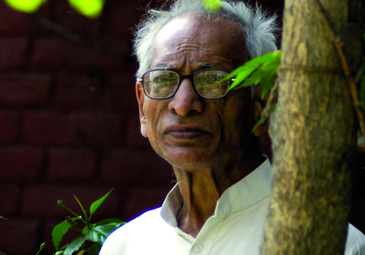
Surendra Mohan, socialist thinker and leader, was a unique repository of political history and knowledge. He was a keen observer of the gradual distortions that have seized contemporary politics. What made him unique was that he was unsparing in exposing the hypocrisy and chicanery of his old socialist colleagues when it came to the crunch. On December 16, I met him to get his views on the purported “nervousness” in corporate India and its veiled threats to invest abroad because it is getting impossible to do business in India. I spent about 90 minutes with him, discussing the transition of Indian economy from the socialist era to liberalisation. As usual, he was a mine of information with a deep insight into history. He was equally well-informed about contemporary politics. He was at his eloquent best while explaining the “lobbyist” phenomenon in historical perspective. As usual, I gained a lot from his perspectives. I requested him to write an article for Governance Now on the topic and he readily agreed.
But the frailty of human life dawned on me with crushing effect the next morning. Surendra Mohan passed away barely 12 hours after I had met him. He was perhaps the last of the socialist stalwarts whose life was his message. A stickler for ethical values and probity in public life, he was also self-effacing. Needless to say, with his demise I have lost a valuable reference point. Here are excerpts from the last interview with one of the most incisive minds in Indian politics.
How do you explain the Niira Radia phenomenon? You have been a political activist for the past six decades. What has transformed the relationship between politicians and industrialists over the years?
You see, politicians always enjoyed good relations with industrialists. Even in pre-independence time, the Tatas and Birlas were close to the political class. But their influence was very limited. The main reason was the influence of Mahatma Gandhi on public life. His austere lifestyle was the role model for any aspiring politician. The flexibility of the Congress leadership was so great that it could accommodate industrialists like Birla and Bajaj on the one hand and revolutionary socialist leaders like Ram Manohar Lohia and Jayaprakash Narayan on the other. But things went awry after independence .
But Nehru was also an adherent of socialist philosophy and his regime also favoured the policy of public sector occupying the commanding heights of Indian economy.
True. But Nehru was leading a contradictory life. He was fond of luxury but had pursued socialism in public policies. He was caught in this contradiction which resulted in many scams even in his lifetime. For instance, the Mundra episode exposed by his son-in-law Feroze Gandhi led to the sacking of the then finance minister. There was another instance when petroleum minister K D Malviya received Rs 10,000 as donation from Jasmuddin, a mine owner from Calcutta. Since the amount of donation was not reflected in the party’s account, Malviya had to resign. These are some examples that were indicative of the distortions in public life. But Gandhi’s influence of austerity as a precondition for public life was such that politicians tended to shun proximity with corporate houses in public. In private, however, Tatas and Birlas remained their favourites. What you see today in the Radia tapes is a logical extension of this hypocrisy. Now in post-liberalisation era, the Gandhian inhibition is no longer there for politicians.
But Indira Gandhi also aggressively pursued socialism as agenda.
It was sham socialism that she had pursued. Let me recount an interesting episode. In the late seventies, Chandra Shekhar, known as a young Turk in the Congress, attacked Tatas and Birlas in a very fierce manner. But that attack had nothing do with Indira Gandhi’s socialism. In reality, she had unleashed Chandra Shekhar against the then finance minister Morarji Desai who was known to be close to these industrial houses. Her idea of socialism was nothing more than rhetoric. I still recall that around the 1970s, corruption became the main issue. There was much discussion about black money which was running the parallel economy. Even during Nehru’s time, there were speculations about Indian politicians and bureaucrats depositing their ill-gotten wealth into Swiss bank accounts. Though the government set up committees to find out the extent of black money’s influence, nothing was done to check the menace.
How and when did the politician- industrialist nexus get transformed?
It got transformed after 1991 when P V Narasimha Rao and Manmohan Singh launched liberalisation. In fact, they not only revoked the licence-permit Raj but also removed all hurdles for corruption. Despite its shortcomings, there were certain inhibitions and checks against corruption even in the sham socialism pursued by Indira Gandhi. But the post-liberalisation phase unleashed greed of the corporate sector which colluded with the political class and bureaucracy to subvert public policy. The Niira Radia episode is just a tip of the iceberg of the political clout wielded by big houses. There may be various Radias promoted by corporate houses unknown to us. All this is indicative of the fact that the big corporate houses exercise overweening influence over the government and public policy and this is a dangerous trend.
Deepak Parekh has been warning about migration of capital from India. He says big corporate houses will tend to go abroad in frustration because of the unfavourable atmosphere at home. What is your view?
This threat handed out by Ratan Tata and Parekh was nothing but a red herring by big corporate houses to divert people’s attention from their misdeeds. Where will they go? In the US, the economy is shrinking. In the European Union, it is in bad shape. If they invest, their obvious motivation is to get maximum returns on the investment. Such threats are only meant to divert attention from their subversive methods exposed by the Radia tapes. And let me tell you, people in India react strongly to corruption. These tapes only show the extent of clout wielded by big corporate houses and their questionable practices to subvert public policy.
Where will all this lead to?
There is a risk of India becoming a banana republic. Otherwise, how do you explain the Indian prime minister’s statement that every Indian loves George Bush? The government of the day appears to be subservient to the US. Though it will take time, I can foresee this possibility (banana republic) unless the country’s inner strength expresses itself unequivocally and powerfully.
There seems to be a similarity in your and Ratan Tata’s assessment.
No, there is a difference. Voh bana rahe hain, main chetawani de raha hun (he is turning India into a banana republic, I am cautioning about it).
PS: The reference was to Ratan Tata as symbol of corporate India.