Congress plans Rs 100 crore social media war chest

Sibal stresses on need to take on BJP in the new arena to woo middle class

bhavdeepkang

Bhavdeep Kang | January 19, 2013


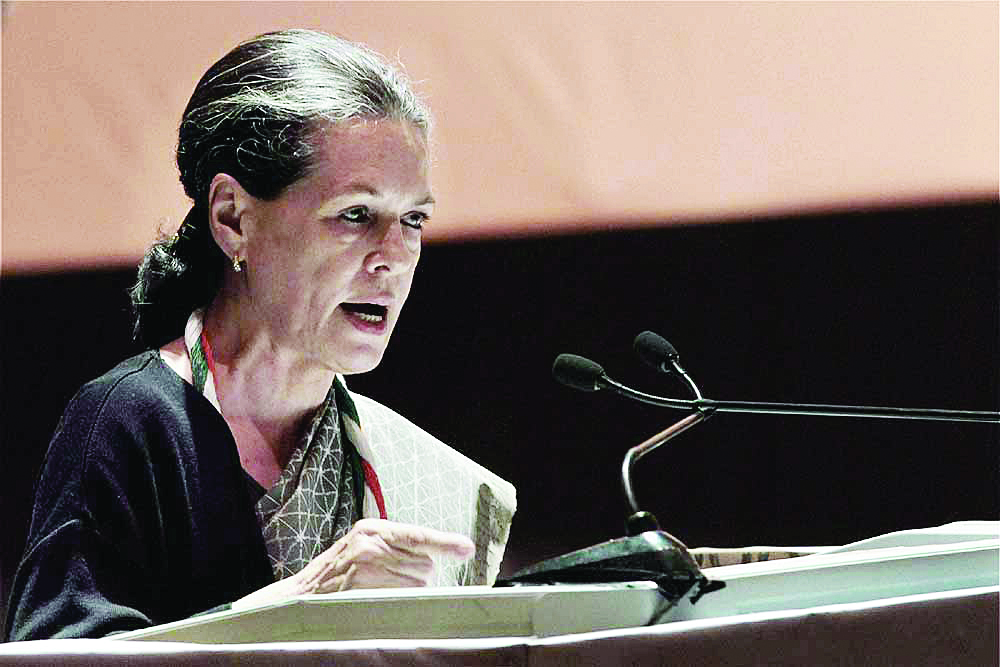
Sonia Gandhi addressing a party chintan shivir session in Jaipur

The Congress party would require Rs 100 crore during the next 18 months - till the Lok Sabha elections - to counter the main opposition BJP in the field of social media, telecom minister Kapil Sibal said at the session on emerging political challenges at the party's Chintan Shivir at Jaipur on Saturday.

The BJP, he said, had a hundred people tweeting against the Congress in the morning. By afternoon, the tweets would become news on TV channels and by the next day, they became headlines in the print media.

Sibal made a strong case for a pro-active approach to the social media. He pointed out that the BJP made extensive use of the social media to reach out to the middle class. He referred to the anti-government blitz on social networking sites following the brutal bus rape case and earlier during the Anna Hazare-led agitation for a Jan Lokpal Bill, which snowballed into street protests.

Also read: A lot left unsaid in Sonia's address

With the increasing penetration of the internet across social classes, the Congress should not be squeezed out of that space, Sibal said. He pointed out that elections in nine states and the Lok Sabha polls were imminent, so the party would have to undertake a strong counter-offensive on a war footing.

Digvijay Singh, who heads the committee on communications strategy, said the party was concerned about the march the BJP had stolen in terms of the social media. "Narendra Modi has a sanchar kendra near Ahmedabad for tracking the social media," he said, adding that a report on a counter-strategy would be submitted to Rahul Gandhi in the next ten days.

Congress president Sonia Gandhi spent almost two hours at the session on emerging political challenges at the Congress chintan shivir in Jaipur, in the course which the three Cs were discussed: communalism, corruption and coalition. She maintained a studious silence throughout.

Science and technology minister S Jaipal Reddy made two significant points. He said the Congress would have to undertake an exercise in social engineering in Uttar Pradesh and Bihar in order to establish itself in those states. He said that OBCs should be actively wooed. He also expressed the view that the Congress should not be on the defensive on the corruption issue. It should not appear in the public mind as being the source of corruption but should take the issue head on. Among others who spoke was information and broadcasting minister Manish Tewari. 

In the session on socio-economic issues, delegates strongly felt that the government's repeated doses of economic reforms should be tempered with welfare measures before going to polls. Congress leader Vayalar Ravi said there was no need to be wary of UPA II being seen as a pro-subsidy regime, because the US and OECD countries too disbursed heavy subsidies to farmers.

On Friday, the first day of the three-day conclave, the Congress president attended the session on the party organization and on women's empowerment, spending 45 minutes at each venue.

Comments


Other News

AI: Code, Control, Conquer

India today stands at a critical juncture in the area of artificial intelligence. While the country is among the fastest adopters of AI in the world, it remains heavily reliant on technologies developed elsewhere. This paradox, experts warn, cannot persist if India seeks technological sovereignty.

RBI pauses to assess inflation risks, policy transmission

The Reserve Bank of India (RBI) has begun the new fiscal year with a calibrated pause, keeping the repo rate unchanged at 5.25 per cent in its April Monetary Policy Committee (MPC) meeting. The decision, taken unanimously, reflects a shift from aggressive policy action to cautious observation after a signi

New pathways for tourism growth

Traditionally, India’s tourism policy has been based on three main components: the number of visitors, building tourist attractions and providing facilities for tourists. Due to the increase in climate-related issues and environmental destruction that occurred over previous years, policymakers have b

Is the US a superpower anymore?

On April 8, hours after warning that “a whole civilisation will die tonight,” US president Donald Trump, exhibiting his unique style of retreating from high-voltage brinkmanship, announced that he agreed to a two-week ceasefire with Iran. The weekend talks in Islamabad have failed and the futur

Machines communicate, humans connect

There is a moment every event professional knows—the kind that arrives without warning, usually an hour before the curtain rises. Months of meticulous planning are in place. And then comes the call: “We’ll also need a projector. For the slides.”   No email

Why India is entering a ‘stagflation lite’ phase

India’s macroeconomic narrative is quietly shifting—from a rare “Goldilocks” equilibrium of stable growth and contained inflation to a more fragile phase where external shocks are beginning to dominate domestic policy outcomes. The numbers still look reassuring at first glance: GDP


Archives

Current Issue

Opinion

Facebook Twitter Google Plus Linkedin Subscribe Newsletter

Twitter