
If nature of crime is gruesome, sending juveniles to reform homes don't send a good message, says director of the NGO Centre for Social Research

Deevakar Anand | August 7, 2014 | New Delhi
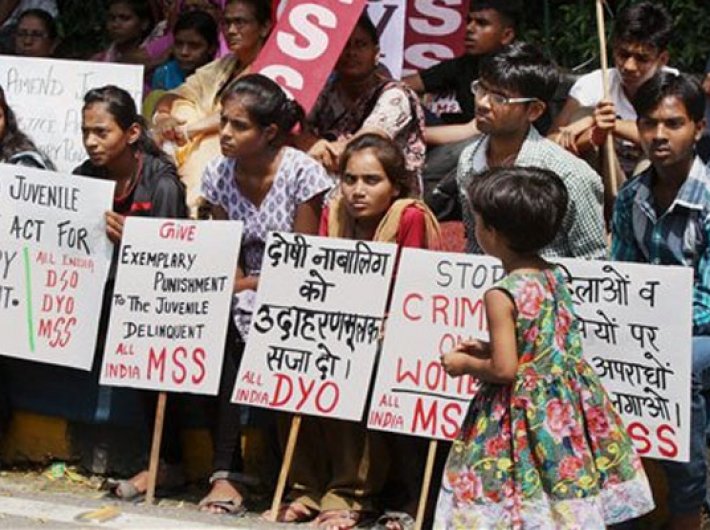
 Activists and NGOs working on child rights have raised questions on the union cabinet approving an amendment bill on Wednesday that proposes juvenile justice board can decide if a minor above 16 years of age should be tried in a regular court or sent to correction homes. They believe it will prove counter-productive instead of acting as a deterrent for child offenders.
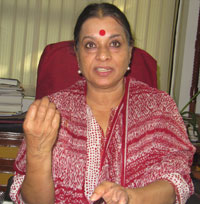
But New Delhi-based NGO Centre for Social Research (CSR) director Ranjana Kumari believes otherwise. She tells Governance Now that there has been a huge change in the sociological backdrop in the present day India and lowering the age from 18 to 16 for juvenile offenders to be tried in the regular courts is the need of the time.
Edited excerpts from an interview:
How justified is this latest cabinet approval to amend the Juvenile Justice (Care and Protection of Children) Act, 2000, which could allow 16- or 17-year-olds committing heinous crimes to be tried in regular courts? There has been a lot of objection against reducing the threshold from 18 years to 16 years.
We run a rape crisis centre at CSR and regularly come across cases where children are raped by juveniles, most of them neighborhood boys. In our experience, juvenile boys are very brutal when they are involved in rape cases. There are two reasons for it – one the mindset and the experience and socialisation they are going through and second their fear of getting exposed and nabbed. So they harm the children physically beyond rape.
If the nature of crime is gruesome, then by just sending those to reform homes are not going to send a good message. They should be tried in the regular courts.
But critics say it will hamper the possibility of reforming a juvenile, especially if he is as young as 16.
For me, it is very important to look into the nature of crime. I think if crime is very serious like a rape or a murder, then certain thought is required to understand the psychological state of mind of the culprit.
We already consider 18-year-olds as adults. And in today’s world, those between 16 and 18 years of age are roughing it out and are exposed to lot of criminal activities around them. So, it is not wrong to set 16 years as the bottom-line.
We have to understand the changing nature of social and sexual relations in our society and exposure and decline in the family and social support, in urbanising India everybody is an autonomous individual. So there are more chances of them getting astray because there is no social pressure.
So from sociological point of view, these autonomous individuals take bigger risk and engage in bigger crimes because they don’t have the fear of the family or society.
Critics contend that a better way to curb crime among juveniles is by improving the support system for them in their own childhood so that they don’t stray and end up being offenders.
We all for child rights. But the problem is India has always been confused about who is a child – a 16-, 17- or 18-year-old is not a child. According to even the labour laws, 14 years of age is the demarcation line. Someone is a child slave till the age of 14 years only.
My view is criminal responsibility should be fixed as early as in the case of 12 year old offenders.
But if we treat 14-year-olds or 16-year-olds as regular offenders, what about the risk of them being exploited both mentally and sexually in jail with other convicts as is common in Indian jails?
Of course you can’t leave it just by bringing the age to 16 and let the jails be how they are and let the police behave as they do. A reform is needed there too. Besides, the 16-year-old if treated like an adult offender shall be given psychological counselling too.
How much can we trust the juvenile justice board on its discretion to decide if the brutality of the crime is grave enough for a juvenile to be tried in a regular court?
I agree with you but we are trusting the same board to assess every juvenile crime. So how can you not trust the board for making that demarcation? We trust them for all juvenile cases already.
In fact, CSR too had recommended – to both this government and the previous government – that even if you try 16-year-olds in regular courts you have to bring juvenile boards.
But given the subjectivity involved in assessing it, it is believed this will entail dilemma and controversy over the board’s decisions.
There can always be a question. Even I am asking this to me. What about someone who is a 15-year-old. That’s why it is important that the board makes independent assessment of case and refer it to the regular court.
Breast cancer has become a public-health challenge in India. The greatest opportunity is to find cancers earlier. Artificial intelligence (AI) is opening a new era in breast cancer detection. AI systems can analyse mammograms and other breast-imaging studies, identify subtle abnormalities and assist radi
Indian agriculture is experiencing significant climate volatility, while the world economy seems to be in a highly volatile situation. Economic indices from various countries show that they need to recalibrate their strategies to withstand economic headwinds. In such a challenging situation, a country li
India’s southwest monsoon ended with a 13% rainfall deficit in 2026, its weakest performance in a decade, raising concerns over agricultural production, water security and the upcoming rabi season. With El Niño expected to persist into early 2027, experts warn that declining soil moisture, dep
For over a decade, India’s e-commerce story has rested on a simple premise: platforms connect buyers and sellers, while data fuels efficiency, personalisation, and scale. However, as the market matured, its structure has revealed a growing imbalance. E-commerce platforms, especially marketplace ent
The interaction between active Western Disturbances, increased atmospheric moisture and the region’s complex topography aswell as global warming are important factors behind intense rainfall in the Himalayas, leading to flash floods in Nepal, according to meteorologists. Nepal
Last summer, the two of us spent several weeks in rural Madhya Pradesh with a non-profit that works on gender justice through women’s self-help groups. We went in with a notebook full of laws. The Protection of Women from Domestic Violence Act. The Dowry Prohibition Act. Free legal aid for every wo










